
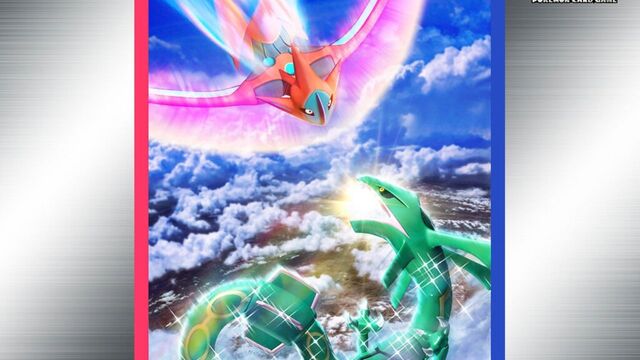
For collectors of vintage Japanese Pokémon cards, few periods are as distinctive as the ADV and PCG eras.
Spanning much of the Generation III period, these cards arrived alongside Pokémon Ruby, Sapphire, Emerald, FireRed, and LeafGreen. It was a transitional time for Pokémon: the enormous initial boom of the late 1990s had passed, a new generation of Pokémon was taking center stage, and the Pokémon TCG itself was undergoing a major transformation.
The result was an era filled with cards that today feel completely different from both the earliest vintage releases and modern Pokémon sets.
Pokémon-ex, Pokémon ☆, Delta Species, Team Rocket Pokémon, unique promotional cards and some of the most memorable Japanese artwork of the 2000s all emerged during this period.
For collectors at Pokemastersvault, the ADV and PCG era represents an especially fascinating chapter of Pokémon history.
The Beginning of the ADV Era
The Japanese Pokémon Card Game ADV series officially began on January 31, 2003.
Its arrival closely followed the Japanese release of Pokémon Ruby and Sapphire, bringing the newly introduced Hoenn region into the Pokémon TCG. The first expansion was accompanied by constructed starter decks centered around Treecko, Torchic and Mudkip.
Visually, ADV represented a major departure from the Pokémon Card e series that preceded it.
The large borders designed around e-Reader functionality disappeared, replaced by a cleaner design that feels considerably closer to later Pokémon cards.
But the biggest change was not the border.
It was the introduction of Pokémon-ex.

Pokémon-ex Changed the Game
Pokémon-ex introduced a simple but important risk-versus-reward mechanic.
These Pokémon could have higher HP and powerful attacks, but if your opponent Knocked Out a Pokémon-ex, they could take two Prize cards instead of one. Pokémon’s own historical archive identifies Pokémon-ex as one of the major developments introduced during the ADV era.
For collectors today, the original lowercase Pokémon-ex cards are among the most recognizable cards from the early 2000s.
They also marked the beginning of a concept that would repeatedly return to the Pokémon TCG: exceptionally powerful Pokémon balanced by the opponent receiving additional Prize cards when they are defeated.
Cards featuring Pokémon such as Rayquaza ex, Mewtwo ex, Groudon ex, Kyogre ex, Gardevoir ex and the Hoenn starters helped establish the visual identity of the era.
The Japanese ADV Sets
The main Japanese ADV series began with the original 1st Expansion Pack and continued with several releases that explored the world and Pokémon of Generation III.
The major releases included:
1st Expansion Pack
The beginning of Pokémon Card Game ADV and one of the first major appearances of Generation III Pokémon in the Japanese TCG.
Miracle of the Desert (砂漠のきせき)
The second expansion, featuring a strong desert theme and Pokémon including Gardevoir ex and Raichu ex.
Rulers of the Heavens (天空の覇者)
A particularly memorable ADV release heavily associated with powerful Dragon Pokémon and cards such as Rayquaza ex.
Magma VS Aqua: Two Ambitions (マグマVSアクア ふたつの野望)
An enhanced expansion built around the conflict between Team Magma and Team Aqua.
Undone Seal (とかれた封印)
The fourth numbered ADV expansion and one of the final major releases before the Japanese TCG moved into the next period.
Pokémon’s official historical archive lists these releases as part of the ADV series alongside numerous constructed decks, promotional products and movie-related releases.
The Transition to PCG
In 2004, the Japanese Pokémon TCG moved beyond the ADV branding into what collectors commonly refer to as the PCG era.
This period took many of the ideas introduced during ADV and pushed them much further.
Pokémon-ex remained an important part of the game, but card design and set themes became increasingly experimental.
This period introduced or heavily featured several concepts now closely associated with mid-2000s Pokémon collecting:
Pokémon ☆ — Gold Stars
Delta Species Pokémon
Rocket’s Pokémon-ex
Holon Pokémon and Trainers
Unusual Pokémon typings
Distinctive themed expansion sets
And among all of these, one rarity would become legendary.
Pokémon ☆ — The Gold Stars
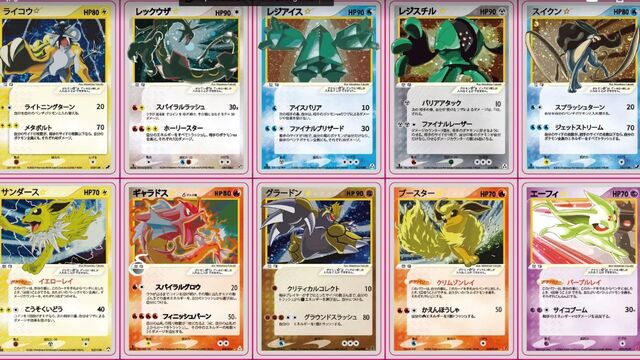
If one type of card represents the PCG era to modern collectors, it is probably Pokémon ☆, better known as Gold Stars.
Gold Star cards feature a small gold star next to the Pokémon’s name and typically depict the Pokémon in its alternate or Shiny coloration.
They were intentionally difficult cards to pull and were fundamentally different from an ordinary holographic rare.
Today, names such as Rayquaza ☆, Charizard ☆, Mew ☆, Pikachu ☆, Latias ☆ and Latios ☆ are closely associated with high-end collecting from this generation.
But their appeal goes beyond rarity.
Gold Stars come from an era before modern full-art cards became standard. Instead of covering almost the entire card with artwork and texture, they retain the traditional Pokémon card layout.
That contrast gives them a very different visual identity from modern chase cards.
You are looking at something that still unmistakably resembles a classic Pokémon card, yet was created to be exceptionally special.
Why Gold Stars Became So Desirable
Rarity alone does not explain the appeal of Gold Stars.
They combine several characteristics collectors tend to appreciate: Shiny Pokémon, distinctive artwork, iconic characters, limited availability and an instantly recognizable rarity symbol.
Condition is another important factor.
These cards were originally released as playable Pokémon cards rather than luxury collectibles intended to immediately enter protective cases. Many surviving examples were played, traded, stored in binders or handled by children.
Finding particularly clean examples decades later can therefore be considerably more difficult than simply finding the card itself.
This combination has turned Gold Stars into one of the defining collectible categories of the ADV/PCG generation.
The World of Delta Species
Gold Stars may receive much of the attention, but Delta Species (δ) is arguably one of the most creative concepts from the entire era.
The Delta Species storyline centered around Holon, a mysterious location where unusual conditions caused Pokémon to develop types different from what collectors would normally expect.
The result was something genuinely strange.
Familiar Pokémon suddenly appeared with unexpected TCG typings.
Fire-type Pokémon could appear as something completely different. Pokémon traditionally associated with Darkness, Psychic or Water could receive unusual combinations that would look almost impossible on a normal Pokémon card.
These cards were marked with the distinctive δ Delta Species designation.
For collectors, that makes a binder filled with Delta Species cards immediately recognizable.
Holon and the Experimental Side of Pokémon
The later PCG era was not simply a collection of unrelated gimmicks.
The Holon storyline connected many of these unusual cards together and gave several expansions their own shared identity.
Sets such as Holon Research Tower, Holon Phantom, Miracle Crystal and Offense and Defense of the Furthest Ends explored this increasingly experimental side of the Pokémon TCG.
This is one reason the PCG era remains so interesting to revisit.
Modern Pokémon expansions often have strong visual themes, but the PCG period was willing to fundamentally alter familiar Pokémon within the cards themselves.
A collector browsing these sets can encounter Gold Stars, unusual typings, Pokémon-ex and experimental artwork within the same broader generation.
Rocket Gang Strikes Back
Another standout Japanese release from this period is Rocket Gang Strikes Back (ロケット団の逆襲).
Team Rocket had already played an important role in Pokémon’s earlier history, but this expansion brought the organization into the Pokémon-ex generation.
The result was a darker visual identity featuring Rocket-themed Pokémon and powerful Pokémon-ex.
The expansion also belongs to the early history of Pokémon ☆ cards.
For collectors who enjoy Team Rocket cards, darker Pokémon artwork or unusual interpretations of familiar Pokémon, it remains one of the most distinctive releases of the PCG period.
The Japanese PCG Expansions
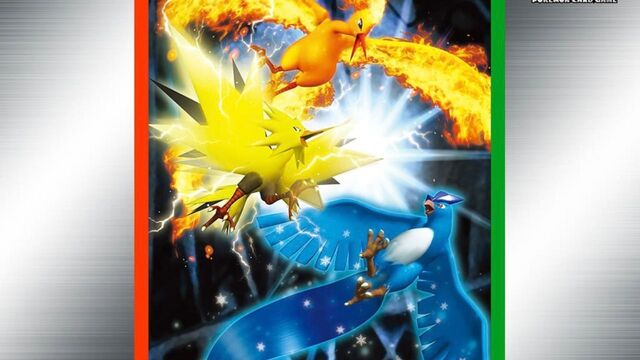
The main Japanese PCG expansion sequence included:
Flight of Legends (伝説の飛翔)
Clash of the Blue Sky (蒼空の激突)
Rocket Gang Strikes Back (ロケット団の逆襲)
Golden Sky, Silvery Ocean (金の空、銀の海)
Mirage Forest (まぼろしの森)
Holon Research Tower (ホロンの研究塔)
Holon Phantom (ホロンの幻影)
Miracle Crystal (きせきの結晶)
Offense and Defense of the Furthest Ends (さいはての攻防)
Pokémon’s official chronology records these expansions as the series that followed ADV, beginning in 2004 and continuing through the Generation III period.
The World Champions Pack, released in 2007, also contains cards classified within this broader PCG generation despite arriving after the Diamond & Pearl era had begun in Japan.
Japanese PCG and the English EX Era
One important detail for collectors is that Japanese and English Pokémon releases from this period do not map perfectly onto one another.
English collectors usually know this generation as the EX Series.
Sets such as:
EX Ruby & Sapphire
EX Dragon
EX Team Rocket Returns
EX Deoxys
EX Unseen Forces
EX Delta Species
EX Holon Phantoms
EX Crystal Guardians
EX Dragon Frontiers
are closely associated with the same broader period.
However, Japanese cards were distributed across different expansions, decks and promotional products.
This means collectors should be careful when assuming that an English card came from a Japanese set with exactly the same name or card list.
For anyone collecting Japanese Pokémon cards specifically, learning the original Japanese expansion structure makes the ADV and PCG eras considerably easier to understand.
Why ADV & PCG Cards Look So Different
Part of the appeal of these cards comes from how restrained many of them appear compared with modern Pokémon cards.
Modern chase cards frequently use full-card illustrations, elaborate textures and complex foil treatments.
ADV and PCG cards generally retain the traditional Pokémon card structure.
The artwork sits within an illustration window. The Pokémon’s information remains clearly separated from the artwork. Holographic effects are often more restrained.
Yet within that traditional structure, the designers experimented constantly.
You can place a standard holo, Pokémon-ex, Gold Star and Delta Species card next to one another and immediately see four completely different approaches to Pokémon card design.
That mixture of classic structure and experimentation gives the era its character.
An Era Built Around Generation III
ADV and PCG also have an important connection to one of Pokémon’s biggest generational transitions.
The period accompanied the Game Boy Advance titles Pokémon Ruby and Sapphire, FireRed and LeafGreen, and Emerald. Pokémon’s official chronology directly connects these games with the 2003–2005 portion of its TCG history.
That meant introducing collectors to Pokémon such as:
Rayquaza
Groudon
Kyogre
Deoxys
Jirachi
Metagross
Salamence
Gardevoir
Blaziken
Sceptile
Swampert
Many of these Pokémon are now among the most recognizable characters from Generation III.
ADV and PCG cards capture a time when they were still new.
More Than Just Gold Stars
It is easy to reduce this entire period to Gold Stars because those cards now attract so much collector attention.
Doing so misses much of what makes ADV and PCG interesting.
There are beautiful standard holographics, Pokémon-ex cards, promotional releases, starter deck exclusives, Delta Species cards, Rocket Pokémon and artwork from numerous illustrators scattered throughout the era.
Some cards are valuable.
Others remain comparatively accessible.
That makes ADV and PCG suitable for several different styles of collecting. Someone might build a complete expansion, collect a favorite Pokémon across the era, focus entirely on Pokémon-ex, hunt Japanese promos or simply search for artwork they like.
Not every interesting vintage Pokémon card needs to be the rarest card in the set.
Condition Matters
Collectors entering the ADV and PCG eras should pay particular attention to condition.
These cards are now around two decades old, and many surviving copies were originally handled as normal trading cards.
Common issues can include edge wear, whitening, surface scratches, holo scratching, small dents and binder-related damage.
Japanese cards are often associated with excellent print quality, but that does not mean every surviving ADV or PCG card is automatically Near Mint.
For more expensive cards in particular, examining the front, back, corners, edges and holographic surface is important before buying.
Why Collectors Are Rediscovering the Era
ADV and PCG sit in an unusual position within Pokémon history.
They are not part of the original 1990s Pokémon boom, but they are no longer remotely modern either.
For collectors who grew up with Ruby, Sapphire and Emerald, these cards represent the Pokémon they first encountered as children.
For newer collectors, they offer something different: an era before alternate arts, Illustration Rares, Special Art Rares and today’s increasingly complex rarity structures.
There is also an enormous amount to discover.
Many collectors recognize Charizard ☆ or Rayquaza ☆ immediately but may never have explored the Japanese sets those cards came from, the surrounding Pokémon-ex cards, obscure deck exclusives or the broader Holon storyline.
That depth is what makes the era so rewarding to collect.
A Unique Chapter in Pokémon TCG History
The ADV and PCG years were a period of transition.
Pokémon moved deeper into Generation III. The e-Reader design disappeared. Pokémon-ex changed the structure of competitive cards. Gold Stars introduced an entirely different level of chase card. Delta Species experimented with the identities and typings of familiar Pokémon.
Many ideas introduced during this period disappeared.
Others evolved and eventually returned in completely different forms.
But the cards themselves remain unmistakably products of the early-to-mid 2000s.
That is precisely what makes them special.
For collectors exploring vintage Japanese Pokémon beyond the earliest sets, the ADV and PCG eras offer one of the deepest and most visually distinctive parts of the hobby.
At Pokemastersvault, our focus is not only on modern Japanese Pokémon releases, but also on the cards and sets that shaped the history of the Pokémon TCG. Whether you collect Pokémon-ex, Gold Stars, Delta Species or simply appreciate the artwork of this generation, ADV and PCG are eras worth discovering.


