

The Pokémon card market has evolved from a nostalgic hobby into a serious investment space. Today, collectors are not only chasing rare cards for fun, but also evaluating them for their long-term value and growth potential. One of the most common questions is whether modern or vintage Pokémon cards offer the better investment. The answer is not straightforward, because both segments of the market operate in very different ways.
Understanding how supply, demand, and collector behavior differ between modern and vintage cards is essential if you want to make smart decisions and build a collection that holds or increases in value over time.
How Modern and Vintage Pokémon Cards Are Defined
To properly compare the two, it is important to define what “modern” and “vintage” actually mean in today’s market. Vintage Pokémon cards generally refer to cards released between 1996 and the early 2000s, including early sets that shaped the foundation of the hobby. These cards are tied closely to nostalgia and the original wave of Pokémon popularity.
Modern Pokémon cards, in this context, include everything from the Sword & Shield era through the current Mega Evolution era. This period is defined by high-quality printing, premium artwork, and a massive global audience of collectors and investors. The distinction matters because vintage cards are largely driven by scarcity, while modern cards are driven heavily by demand.
The Role of Population Reports in Vintage Cards
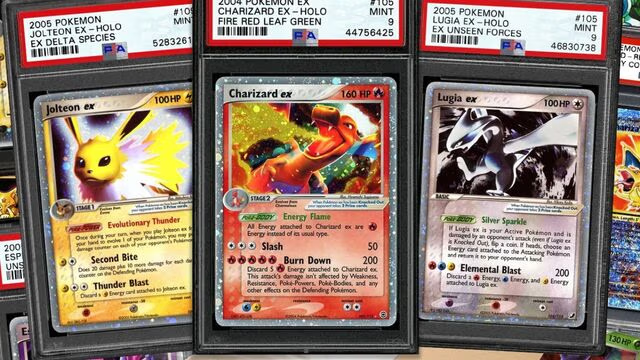
One of the most important factors when evaluating vintage Pokémon cards is the population report, often referred to as the pop report. This data shows how many copies of a specific card exist in each grade, such as PSA 9 or PSA 10, and it plays a huge role in determining value.
Many vintage cards were not preserved in perfect condition, especially during the early years when collecting was more casual. As a result, high-grade copies are genuinely rare. Even cards that may appear common can become extremely valuable if very few exist in top condition. This scarcity creates a strong foundation for long-term value, as it is something that cannot be reproduced or increased over time.
Because of this, collectors and investors often rely heavily on population data when making decisions in the vintage market. A low PSA 10 population can significantly increase a card’s desirability and price, making the pop report one of the most important tools when evaluating older cards.
Why Demand Drives the Modern Market
Modern Pokémon cards operate under very different conditions. They are printed in much larger quantities and are generally easier to obtain in high condition. This means population reports for modern cards are significantly higher, and there are many more PSA 10 copies available.
However, what modern cards lack in scarcity, they make up for in demand. The current Pokémon market is larger than ever, with a global audience fueled by social media, YouTube content, live openings, and constant new releases. This level of exposure creates strong and consistent demand, even for cards that are not particularly rare.
Because of this, modern cards can rise in value quickly. Cards featuring popular Pokémon, standout artwork, or limited early supply often see rapid price increases shortly after release. While they may not have the same long-term scarcity as vintage cards, the strength of demand can still drive impressive short-term performance.
Stability Versus Growth Potential
Another key difference between modern and vintage Pokémon cards is how their prices behave over time. Vintage cards tend to be more stable, with slower and more predictable growth. Their value is supported by long-term collectors, nostalgia, and limited supply, which makes them less sensitive to short-term trends.
Modern cards, on the other hand, are more volatile. Prices can rise quickly during periods of hype, especially when a new set is released or a particular card gains attention online. At the same time, prices can also drop once the initial excitement fades or if reprints increase supply.
This makes modern cards more dynamic but also riskier. They offer higher upside in the short term, but require better timing and awareness of market trends.
Grading Differences Between Modern and Vintage
Grading plays an important role in both markets, but the outcomes are very different. Vintage cards are much harder to grade at the highest levels. Small imperfections, wear from age, and older printing methods make PSA 10 copies extremely difficult to achieve. This is why population reports are so important, and why high-grade vintage cards command such high prices.
Modern cards are produced with better technology and consistency, making it easier to achieve high grades. As a result, there are far more PSA 10 modern cards available. While this reduces scarcity, it also makes grading more accessible to newer collectors.
Even so, certain modern cards can still stand out if they have lower early populations or exceptional demand. In these cases, grading can still significantly increase value.
Sealed Products and Investment Strategy
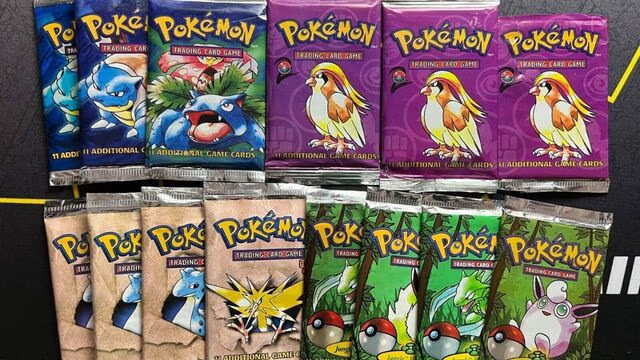
The difference between modern and vintage cards also extends to sealed products. Vintage sealed products are extremely rare and often very expensive, making them difficult to access for most collectors. They are typically held by advanced collectors or investors and are rarely opened.
Modern sealed products, such as booster boxes, are much more accessible and often play a major role in investment strategies. Many collectors purchase modern boxes at release and hold them long-term, expecting value to increase once the set goes out of print. This approach has proven successful for several modern sets, especially those featuring popular Pokémon or strong artwork.
Which Is the Better Investment?
Choosing between modern and vintage Pokémon cards ultimately depends on your goals as a collector or investor. Vintage cards offer true scarcity, long-term stability, and historical significance. They are generally better suited for those who prefer a lower-risk approach and are willing to hold assets over a longer period.
Modern cards offer strong demand, lower entry prices, and the potential for faster returns. They are better suited for collectors who are active in the market and willing to take advantage of trends and new releases.
Final Thoughts
There is no single answer to which is the better investment, because modern and vintage Pokémon cards succeed for different reasons. Vintage cards benefit from low population reports and genuine scarcity, which gives them long-term strength and stability. Modern cards, especially from the Sword & Shield era through the current Mega Evolution era, are driven by massive global demand, which can push prices up quickly even when supply is high.
Understanding the balance between scarcity and demand is essential if you want to succeed in the Pokémon card market. Many experienced collectors choose not to focus on just one category, but instead build a balanced collection that includes both modern and vintage cards.
If you are looking to get started or expand your modern collection, you can explore the latest Pokémon booster boxes and sealed products here:
pokemastersvault.com